The Frontier Within and Finding Your Way Back with Mike Martin | Episode 180
This episode isn't what you think it is, and it wasn't what I expected when I booked Mike for an interview. I expected a chat about Daniel Boone and how his life’s story inspired Mike to get outdoors, and while that’s kind of what happened, it’s not exactly that straightforward.
Mike is the author of The Honest Wilderness: Finding Daniel Boone and the Frontier Within, but his connection to Daniel Boone started during one of the hardest periods of his life. After his life fell apart, Mike began experimenting with journaling, meditation, and spending intentional time outside. Somewhere along the way, Daniel Boone kept showing up. What started as a simple curiosity became a new way of analyzing his own life.
We talk about using people from history as mirrors, why journaling can help us organize the noise inside our heads, what meditation can actually look like for someone who doesn't think of themselves as a meditation person, and why simply being quiet has become so difficult.
The conversation eventually turns toward a question I've been thinking about a lot lately: What is actually happening to us when we spend time outside?
Maybe the outdoors isn't just a place to recreate. Maybe it's a place where the noise drops away enough for us to hear ourselves again (if you let it).
This conversation is about getting lost, finding your way back, paying attention, and learning to trust the internal compass you've been building your entire life.
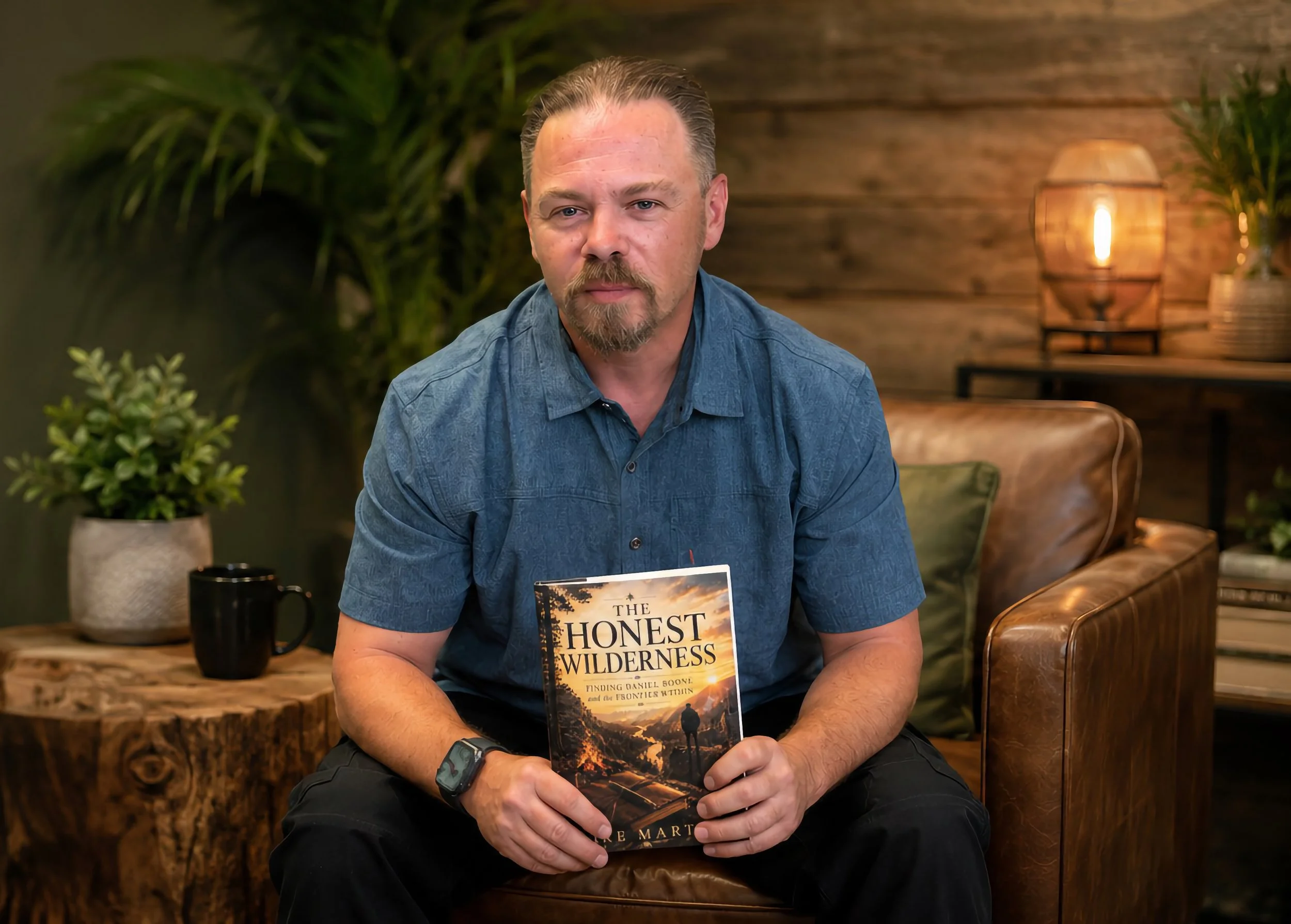
Mike Martin, author of The Honest Wilderness: Finding Daniel Boone and the Frontier Within.
Key Takeaways
Journaling doesn't need to be complicated. Sometimes simply putting thoughts onto paper creates enough space to understand what's happening inside your head.
Meditation can look like sitting quietly, walking slowly, paying attention, or simply allowing yourself to stop filling every moment with stimulation.
History can become a mirror. Mike used Daniel Boone's experiences with loss, uncertainty, failure, and forward movement to better understand his own life.
Spending time outside can create the quiet necessary to hear your own thoughts and reconnect with what Mike describes as an internal compass.
Progress doesn't mean never slipping back into old patterns. Sometimes slipping simply means you're still practicing.
Show Notes
Mike Martin's Story: Mike shares how a period of personal loss eventually introduced him to Stoicism, journaling, meditation, and a completely different relationship with the outdoors.
Daniel Boone as a Mirror: What started as an interest in Daniel Boone became something much more personal. Mike began visiting historical locations, reading biographies, studying maps, and asking what Boone's experiences could teach him about navigating his own life.
Finding the Internal Compass: We explore Mike's idea that our experiences slowly build an internal compass. When life becomes confusing, sometimes the answer isn't adding more information but becoming quiet enough to hear what is already there.
The Modern Wilderness of Overstimulation: Our phones, schedules, responsibilities, entertainment, and constant availability create an incredible amount of noise. We discuss whether one of the great challenges of modern life is simply losing the ability to sit quietly with ourselves.
Journaling as a Practice: Journaling doesn't require pages of polished writing. Mike started with scattered words and thoughts. Over time, the practice helped him organize what was happening internally and recognize patterns in how he talked to himself.
Meditation Without the Stereotypes: Meditation doesn't have to look a certain way. Mike discusses walking meditation, guided meditation, sitting quietly outside, and using natural objects and processes as prompts for thinking through our own lives.
Using Nature as a Mirror: A fallen tree, changing seasons, decay, growth, and regeneration can become ways of thinking through experiences in our own lives. Not because nature is giving us instructions, but because slowing down enough to observe it gives us something tangible to think about.
Why Does Being Outside Feel Different?: We explore one of the questions I'm increasingly interested in: why does spending time outside seem to change the way we feel and think? Maybe part of the answer is participation. In a natural environment, we're stepping back into a living system rather than observing life from behind a screen.
Forget the Metrics for Five Minutes: Not every experience needs to produce something measurable. Sometimes getting outside can be as simple as walking through the front door, sitting somewhere quiet, and paying attention.
The Outdoors Scales With You: You don't need a wilderness expedition to experience the outdoors. It might be a backyard, a neighborhood walk, a local trail, or a multi-day backcountry trip. The invitation is the same.
Boone Trace: Mike also shares his developing plans to explore and hike Boone Trace, the historic route associated with Daniel Boone's movement into Kentucky.
Links:

Thanks for listening!
If you enjoyed this episode, I’d love to hear about it. Leave a comment below or contact me here.
- Emory, By Land