Back to the Mountains with Tom French | Episode 179
In this episode, I sit down with Tom French, author of The Gap Years: Climbing, Skiing, and the Journey Back, to talk about what happens when we step away from the expected path and make room for a different kind of experience.
Tom spent his pre-career years climbing, ski racing, and traveling around the world before leaving that life behind to build a career, get married, and raise a family. When he retired at 60, and before moving into the next stage of life, he decided to return to the mountains to see whether the interests that had shaped him as a young man still held meaning decades later.
As expected, our conversation became about much more than mountaineering. We talked about the seasons of life, accepting that parenthood and work will temporarily change how we experience the outdoors, and trusting that the mountains will still be there when we are ready to get back to them. Tom also explains why a gap year is not just time off, but a “conscious interlude”—an opportunity to step outside the normal flow of life and have experiences that may shape whatever comes next.
We also dive into the less visible sides of climbing: the long hours spent waiting inside a tent, the emotional discipline required to manage uncertainty, and the balance between physical ability, risk management, and mental resilience. Tom shares what it was like to return to Everest after his first attempt was cut short, climb Cholatse with his daughter, and rediscover a part of himself that had never completely disappeared.
This is a conversation about adventure, but also about identity, aging, parenting, and giving ourselves permission to return to the parts of life that still matter to us.
Key Takeaways:
The interests we set aside during demanding seasons of life may still be waiting when we have the space to return.
A meaningful gap year is not about doing nothing; it is a conscious interlude filled with experiences that everyday life may not allow.
Success in mountaineering depends on more than physical strength—it also requires risk management and emotional discipline.
Parents can give their children an important gift by allowing them room to choose their own path rather than automatically following the expected one.
Returning to an old passion later in life can offer more than nostalgia; it can reveal what continues to provide meaning and direction.
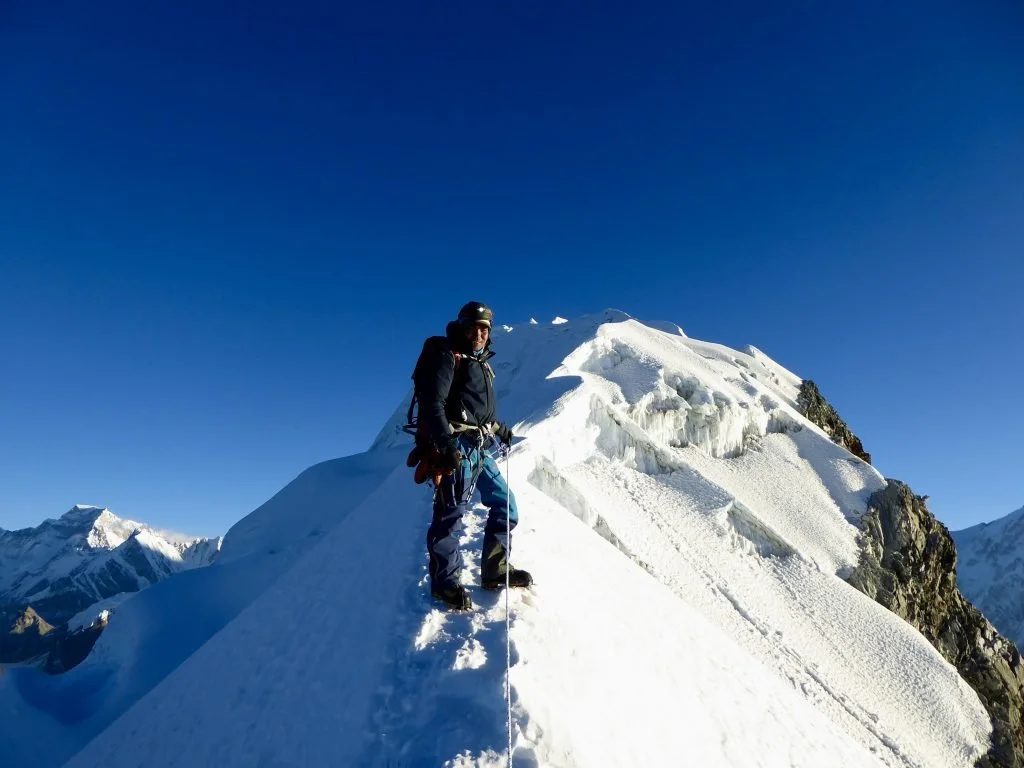
Tom out and about just climbing mountains after retirement. No big deal!
Chapters/Show Notes:
Growing up inside an outdoor store: Tom describes being raised around his father’s climbing and camping shop in Andover, Massachusetts, where he absorbed the culture of hiking, skiing, paddling, and mountaineering from an early age.
Choosing a different path from his father: Tom’s father left corporate life to open an outdoor store, while Tom eventually traveled in the opposite direction, leaving a life centered on climbing to begin a long career in business.
Why some interests move into the background: We talk about marriage, children, work, and the seasons when personal passions receive less time—not because they no longer matter, but because something else deserves our attention.
The mountains will still be there: Tom reflects on returning to climbing in his sixties and realizing that the interests of his youth had not disappeared. They were simply waiting for another season of life.
Finding room to think again: We discuss the mental space created by long walks, approach treks, and time away from normal responsibilities—and why reflection can be difficult when every part of life already demands our attention.
The untold reality of expedition life: Tom explains how little of a major climbing expedition is spent actively climbing. Much of the experience involves waiting, acclimating, managing uncertainty, and learning how to live with your own thoughts.
The three parts of successful mountaineering: Tom divides climbing into three broad components: physical execution, risk management, and emotional management. Strength alone is rarely enough.
What a gap year is really for: A gap year is not necessarily a year of rest or escape. Tom describes it as a conscious interlude between life stages—time used to pursue experiences that can inform the next chapter.
Giving children permission to choose: Tom shares why parents should be careful not to place an invisible boundary around what counts as an acceptable next step after school.
Returning to the mountains at 60: After retiring, Tom gave himself permission to step away from the expected path once again, returning to mountaineering and cross-country ski racing rather than immediately beginning another conventional career chapter.
Climbing Cholatse with his daughter: Tom shares the emotional complexity of climbing with his adult daughter, watching her make the difficult decision to leave the expedition after injuring her knee, and continuing without her.
Supporting the Himalayan Trust: Tom is donating all of his proceeds from The Gap Years to the Himalayan Trust, an organization founded by Sir Edmund Hillary that supports communities in Nepal’s Everest region through education, healthcare, and community development.
Links

Thanks for listening!
If you enjoyed this episode, I’d love to hear about it. Leave a comment below or contact me here.
- Emory, By Land