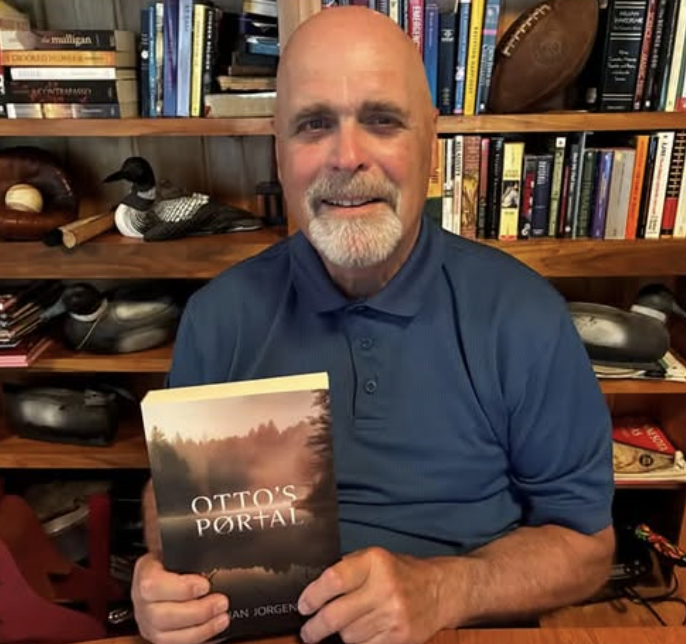
Nathan Jorgenson spent his career as a dentist, but fishing, canoeing, and time in Minnesota's Northwoods kept him looking beyond his office walls. He’s also a novelist, and a lot of what he writes begins with the experiences and questions he brings home from the outdoors.
In this episode, Nate joins me to talk about a lifetime of fly fishing, trips into the Boundary Waters, and a canoe adventure down the Hayes River to Hudson Bay. We explore how spending time outside challenges our sense of control and gives us room to think about things we might otherwise overlook.
I think Nate is right when he says that the feeling of being in control is “not good” for us. One of the greatest things that comes from spending time outdoors, especially in the backcountry, is how we are forced to adapt to changing conditions we’re not in control of. It’s good for us.
Nate shares how writing a story for his dying father became his first novel, Waiting for White Horses, and how questions about life, death, and the soul shaped Otto’s Portal. That leads us into a personal conversation about losing our parents, faith, curiosity, and what we hope to leave our children.
I love conversations like this. We start with a shared interest in the outdoors and end up talking about what matters to both of us.
Key Takeaways
Time outside reminds us how much of life we can’t control.
Wilderness gives us space to follow questions without needing an immediate answer.
The sights, smells, and feelings of outdoor experiences can become the foundation of a story.
Writing helped Nate work through losing his father and connect with readers through shared experiences.
Sharing outdoor experiences with our children gives them memories and questions they can carry into adulthood.
Show Notes
Growing Up Outdoors in Rural Minnesota: Nate shares how growing up on a cattle farm shaped his relationship with the outdoors. Although his career in dentistry kept him inside much of the day, fishing and canoeing remained a consistent part of his life.
The Outdoors and the Illusion of Control: We talk about how working in a controlled environment can make us feel like we’re in charge of more than we really are. Nate explains why being outside, where weather and circumstances can change without our permission, is a reminder he values.
A Lifetime of Fly Fishing: Nate’s interest in fly fishing began when his dad brought home a fly rod and suggested it might be too difficult for them to use. That was enough to get him started. We discuss learning through mistakes, the satisfaction of catching a trout on a fly, and finding an outdoor activity that brings you joy.
What Makes the Boundary Waters Special: Nate describes the lakes, portages, campsites, and changing conditions that have kept him returning to the Boundary Waters. We talk about choosing your own route and how people can enjoy the same place for different reasons, whether they’re fishing or simply exploring by canoe.
A Canoe Adventure to Hudson Bay: A phone call about brook trout led Nate to join an experimental canoe trip down the Hayes River to Hudson Bay. He shares stories about rapids, remote campsites, concerns about polar bears, and a delayed pickup that left the group waiting at York Factory for several days.
Traveling Through History: That river trip also prompted Nate to think about the people who had traveled those waterways before him. We discuss the difficulty of moving upstream in birchbark canoes and how traveling by water can spark curiosity about the history of a place.
How Outdoor Experiences Become Stories: Nate explains how sensory details help bring readers into a story. The smell of smoke, a wet dog, or cold wind blowing down your collar. We talk about how experiences outside give a writer material for exploring fear, love, loss, and other things people recognize in their own lives.
Writing a Story for His Father: Nate began his first novel by writing a story he could read to his dying father, drawing on their time together in a duck boat. After his father passed away, he kept writing. That story became Waiting for White Horses, and the process helped him find some closure.
The Questions Behind Otto’s Portal: Nate shares how his interest in history, physics, and the relationship between body and soul became the foundation for Otto’s Portal. We discuss the novel’s fictional premise and why it took years to find an ending that felt right for its characters.
Faith and Making Room for Questions: We explore how Nate’s curiosity interacts with his Christian faith. He describes how following difficult questions strengthened his beliefs, and we talk about being willing to consider possibilities even when we don’t know where they’ll lead.
Losing Our Parents and Wondering What Comes Next: I share how losing my parents changed the way I think about the difference between a person and their physical body. Nate shares a moment from his own father’s passing, and we discuss why these experiences stay with us and find their way into the stories we tell.
What We Leave Our Children: We close by talking about sharing outdoor experiences with our children and wondering what they’ll carry forward. That leads me to reflect on this podcast as a record my daughters may someday listen to; a way for them to hear what I was curious about and what mattered to me.
Links

Thanks for listening!
If you enjoyed this episode, I’d love to hear about it. Leave a comment below or contact me here.
- Emory, By Land